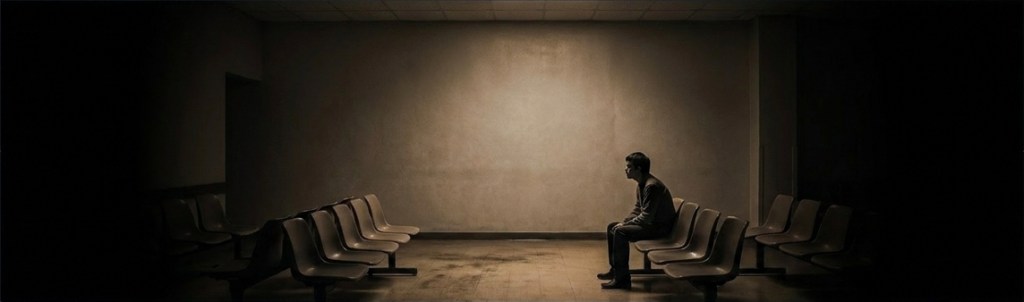
As surgeons, we often imagine that the true drama of medicine unfolds inside the operating theatre. There, decisions are made, anatomy is revealed, and disease is confronted. Yet over the years I have come ot believe that some of the deepest human experiences in medicine occur not in the operating theatre, but just beyond its doors – in the waiting room.
The waiting room is a peculiar place. It is neither part of ordinary life nor fully part of the hospital. It exists in a state of suspension, a threshold between what was and what will be. Time behaves differently there. Minutes stretch into hours. Every opening door attracts attention. Every approaching footstep raises hope or fear.
For the surgeon, it is often a space passed through quickly, almost unnoticed. For patients and families, however, it becomes a temporary universe. In those few chairs are gathered anxiety, love, helplessness, faith, and anticipation. A husband waits for news of his wife. A daughter clutches a folder of reports. A parent silently repeats prayers. Strangers exchange brief glances of understanding, united by a common uncertainty. In that room, social distinctions fade, leaving only the universal human fear of loss and the enduring power of hope.
The waiting room is where control is surrendered. Modern medicine celebrates action. Surgeons are trained to intervene, to repair, to remove, and to solve. Waiting appears passive by comparison. Yet waiting may be one of the most difficult forms of participation. Families can do nothing to influence the operation underway. They must place their trust in unseen hands, in the resilience of the patient, and in forces beyond their control.
In an age that values mastery and certainty, such surrender is deeply uncomfortable. Yet it is profoundly human. The waiting room teaches that not everything important in life can be controlled or hurried. Some journeys can only be endured.
Hope acquires a special character in this space. It survives without guarantees. Relatives wait not because they know the outcome will be favourable, but because they believe it may be.
For the surgeon, the waiting room carries its own moral weight. Behind every consent form lies a family living through its own ordeal. When I step out after an operation, I am not merely delivering clinical information. I am ending a period of suspension. A few simple words—“The operation went well”—can dissolve hours of fear. Few sentences in medicine possess such power.
The waiting room reminds us that surgery is never performed in isolation. It is performed on lives that are connected to other lives through bonds of love, responsibility, and memory. It teaches humility, reminding surgeons that while we may influence outcomes, we do not control destiny.
Perhaps that is why the waiting room remains one of the most philosophical spaces in medicine. In its silence, we discover that waiting is not the absence of action, but an expression of hope itself. In itself, it is a profound participation in the surgery itself!
 Siddhartha Phukan – My Surgical World
Leave a comment