London, 1888
the scene
The sitting room of 221B Baker Street is lit like a confession. The fire burns low, not for warmth but for company, its embers ticking softly as they collapse. Shadows cling to the ceiling corners, reluctant to come down. Every surface bears the evidence of an active and undisciplined intellect: papers piled in geological strata, test tubes clouded with forgotten experiments, a Persian slipper stuffed with tobacco like a joke that has outlived its punchline.
The air is heavy. Coal smoke seeps in through unseen cracks, mingling with the sharper tang of carbolic acid and the stale sweetness of old pipe ash. It is the smell of thinking too long in a closed room.
Against one wall, a bookcase leans slightly, as if exhausted by the weight of knowledge it supports—monographs on chemistry, criminal anthropology, obscure European treatises with dog-eared pages and aggressive marginalia. A skull—whether medical specimen or memento mori is never quite clear—presides over the chaos from the mantel, its empty sockets fixed eternally on Holmes’s favourite chair.
That chair is positioned for dominance: angled toward the window, the door, and the fire all at once. Its arms are scarred with knife marks and cigarette burns, small unconscious signatures of impatience. Draped over the back is an old dressing gown, threadbare at the cuffs, smelling faintly of disinfectant and rain.
The violin lies abandoned on the sofa, its strings slack, bow resting across it like a fallen standard. Nearby, a magnifying glass catches the firelight and throws a warped circle onto the wall—an accidental halo for nothing in particular.
Time behaves oddly here. The clock ticks too loudly, then seems to stop altogether, as if intimidated. Even the fog outside hesitates at the window, pressing its pale face to the glass but not daring to intrude.
This is not a room designed for comfort.
It is a laboratory for the human mind.
A battlefield between boredom and brilliance.
And at its centre stands Sherlock Holmes—tall, angular, self-contained—less a man than the dominant feature of the furniture, as essential and as unforgiving as the fire, the shadows, and the waiting silence.
Watson’s entry
“Do close the door, Watson.”
His voice reaches me before he does—cool, unhurried, already finished with the matter. I comply, quietly, and the room seals itself again, like a specimen jar.
“You have not spoken,” Holmes continues, still facing the mantelpiece, “yet your concern has announced itself with remarkable clarity.”
He turns at last.
“You paused at the threshold—half a second longer than usual. That tells me you anticipated something unpleasant. Your gaze moved first to the fire, then to the sofa, then—despite your best efforts—back to my left sleeve. A physician’s instinct: environment, instrument, patient.”
I say nothing. He does not require confirmation.
“You noticed the violin abandoned mid-phrase. You noticed the bottle. You pretended not to notice the case.” A faint smile touches his lips, sharp as a scalpel. “You are wondering how long this has been going on again, and whether this time you ought to insist.”
He walks past me, retrieving his pipe, though he does not light it.
“You are also recalling, quite involuntarily, our last conversation on the subject—your tone then was earnest, your argument sound, and my response, as you would phrase it, ‘wholly unsatisfactory.’”
He stops by the window, the fog turning him into a silhouette.
“You fear that the room itself has become an accomplice. That the disorder is no longer the result of work, but its replacement. That I am—how did you put it once?—self-prescribing an illusion of purpose.”
At that, he looks at me fully.
“Am I close?”
I clear my throat. “Uncomfortably.”
“Precisely.” He nods, pleased. “Your silence, Watson, is never neutral. It is diagnostic.”
A pause settles between us—thick, meaningful.
He reaches instead for a small bottle resting on the mantle near the clock, its contents catching the firelight with an amber glint. From a drawer he produces a leather case, worn smooth by habit rather than time. The clasp opens with a restrained click. Inside lies a hypodermic syringe—clean, precise, almost elegant.
Holmes removes it with the care of a man handling an instrument he knows too well.
“You may reassure yourself of two things,” Holmes adds lightly. “First, I am perfectly aware of the risks. Second—should I ever truly require saving—I would not choose a better man to notice the symptoms.”
He returns to his chair, all angles and composure once more.
“Now,” he says, “unless you have come merely to count my sins, you will sit down and tell me what the world has done today to merit my attention.”
His fingers—long, white, and restless—adjust the needle. They do not tremble, but neither are they at ease. He rolls back the cuff of his left shirt, exposing an arm already mapped with faint, fading scars. His eyes move across the skin, calculating, dismissing, searching for a patch not yet claimed.
At last, he finds one.
The needle goes in.
Once.
Twice.
A third time.
He exhales slowly, as if some inner machinery has finally aligned itself. The sharp brilliance returns to his gaze, the restless energy settling into something cold and exact. For a moment, the great detective stands utterly still—master of a thousand mysteries, yet unable to escape this one.
Three times a day he does this.
Not for excitement. Not even for pleasure.
But because the world, when insufficiently puzzling, becomes intolerable.
For months.
Outside, London continues to rot, to scheme, to murder and be murdered. Inside, Sherlock Holmes waits—chemically composed—until the next problem worthy of his mind finally arrives.
Discussion
Not Addiction — But Substitution
It is tempting to label Holmes an addict and close the discussion. Arthur Conan Doyle refuses us that simplicity.
Holmes’ use is patterned, contextual, conditional. He uses cocaine when there is no work. He stops the moment meaningful work appears. When a client enters Baker Street, the syringe returns to the drawer without hesitation.
This detail is critical.
Holmes never uses cocaine during a case.
This is not accidental. It reframes the behaviour entirely. The drug is not enhancing performance. It is compensating for an environmental deficit. Cocaine functions as an artificial cognitive load — a way to impose stimulation when the world provides none.
Holmes is not seeking pleasure. He is fleeing silence.
Watson understands this intuitively. He does not scold Holmes. He observes him. He remains present. His response is longitudinal, not dramatic — more monitoring than confrontation
Historical Context Matters
We must resist imposing modern judgments on a Victorian framework.
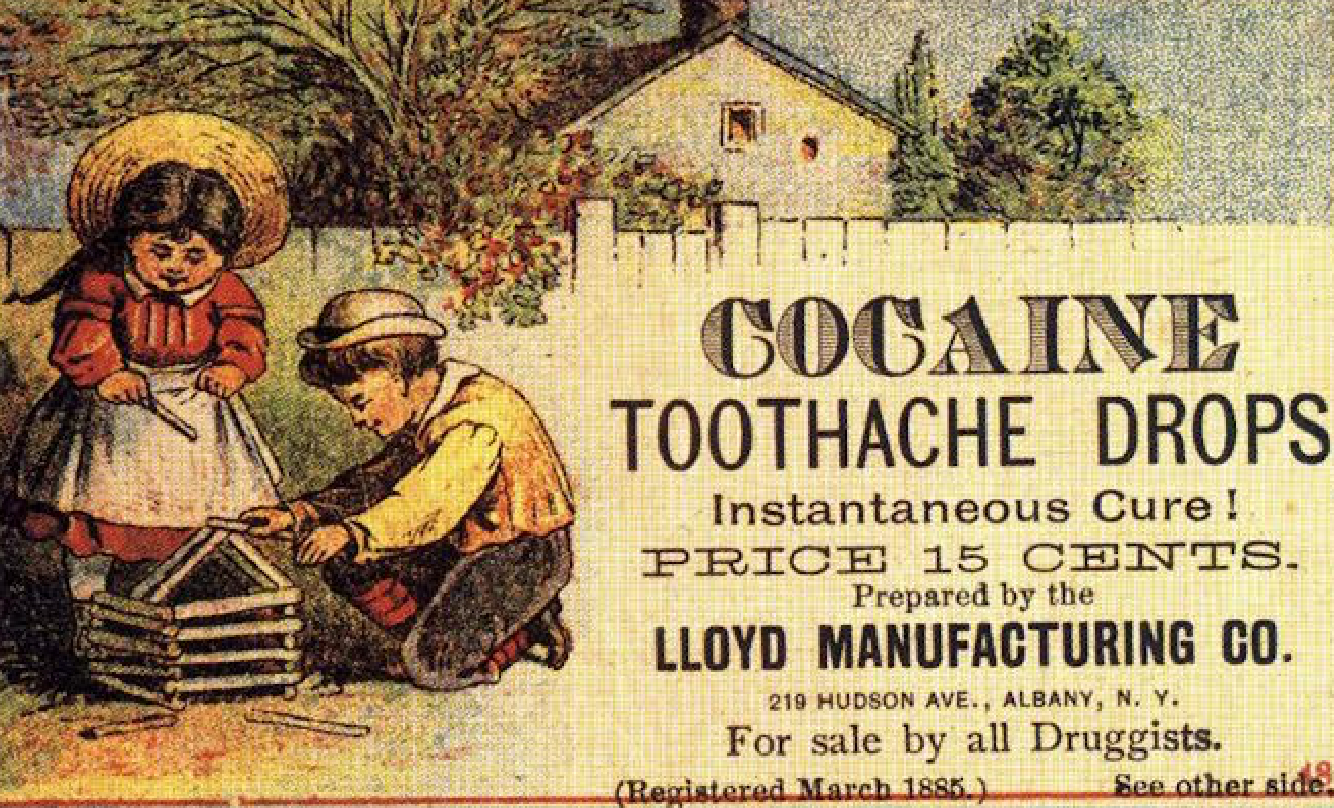
In the late 1880s, cocaine was not illicit. It was innovative. It was purchased openly, respectably — at Harrods. Lozenges for sore throats. Tonics for fatigue. Wine for vitality. The medical profession actively promoted it.
Sigmund Freud published enthusiastically, calling cocaine a “magical substance,” recommending it for depression, indigestion, exhaustion. There was a genuine belief that science had conquered fatigue.
Conan Doyle was a physician. When he wrote Holmes using cocaine, he was not portraying degeneracy. He was portraying modernity.
Holmes is a man of science, using chemical technology to regulate his own neurophysiology.
The specificity matters: the 7% solution.
This is not indulgence. It is titration. Precision. Holmes treats boredom as a pathology and prescribes accordingly.
Watson’s Intervention
As history evolves, so does the narrative.
By the 1890s, the medical literature shifts. Complications emerge: addiction, paranoia, neuropsychiatric decline. Watson changes with it.
Initially tolerant, he becomes interventional.
Crucially, Watson does not moralise. He reframes the risk in the language Holmes respects: performance. He warns of pathological change. Of dulling the instrument. Of irreversible compromise to the very faculty Holmes values above all else.
This is the only argument that penetrates.
High-functioning individuals rarely respond to moral condemnation. They respond to threats against competence.
Still, there is no dramatic cure. Watson later remarks — almost casually — that he has gradually weaned Holmes from his mania. The language is deliberate. This is not redemption. It is management.
Dose reduction. Environmental substitution. Sustained presence.
The Violin and the Syringe
The violin matters.
The syringe and the violin represent two strategies for managing the same problem. Both confront silence.
The syringe is passive and suppressive.
The violin is active and demanding.
Watson describes Holmes not always playing beautifully — sometimes merely scraping, producing fitful, unresolved sounds. This is not performance. It is externalisation. Chaos turned outward rather than chemically dampened.
Holmes never solves a case under the influence. Watson observes the aftermath: lethargy, dysphoria, flattening.
The drug is not Holmes’ strength. It is his shadow.
Without this flaw, Holmes would be a machine. With it, he becomes human — vulnerable to the cost of his own brilliance.
The Surgical Parallel
Surgeons should recognise this pattern.
We are trained to thrive under pressure. The operating theatre provides structure, urgency, hierarchy, and consequence. It rewards focus and punishes indecision.
But what happens when the theatre is quiet?
What happens between lists, between crises, between call schedules? What happens when intensity has no outlet?
For some, rest restores.
For others, rest corrodes.
High function can mask pathology. Productivity can camouflage harm. The absence of visible failure does not equal health.
Holmes’ cocaine use is not caused by overload. It is caused by emptiness.
This is the uncomfortable parallel.
Resolution Without Drama
As Holmes ages, references to cocaine disappear from the narrative. Not abruptly. Not heroically. They simply become unnecessary.
Purpose expands. Human connection deepens. Watson remains.
Holmes eventually retires to the Sussex Downs to keep bees — a detail often treated as eccentric, but in fact profoundly logical.
Beekeeping provides complexity without catastrophe. Pattern without violence. Stimulation without collapse. Nature supplies an endless puzzle that does not demand adrenaline.
And Holmes reaches his final understanding:
The mind may be quiet without being empty.
For decades, he equated stillness with annihilation. By the end, he learns that silence does not require chemical defence.
Final Reflection
This is not a story about cocaine.
It is a story about what happens when exceptional minds are left idle.
For surgeons, the warning is clear.
High performance is not protection.
Brilliance does not confer immunity.
And sometimes the most dangerous moment is not in the operating theatre — but in the quiet that follows.
When purpose disappears, something else will fill the space.
The task is not merely to remove harmful substitutes — but to ensure that meaning, challenge, and engagement remain available.
Some minds do not need rest.
They need better work.
 Siddhartha Phukan – My Surgical World
Leave a comment