Here is a thought that should unsettle you: the most philosophically sophisticated superhero ever created wears no cape, flies no jet, and possesses not a single superpower. He simply refuses — generation after generation — to stop.
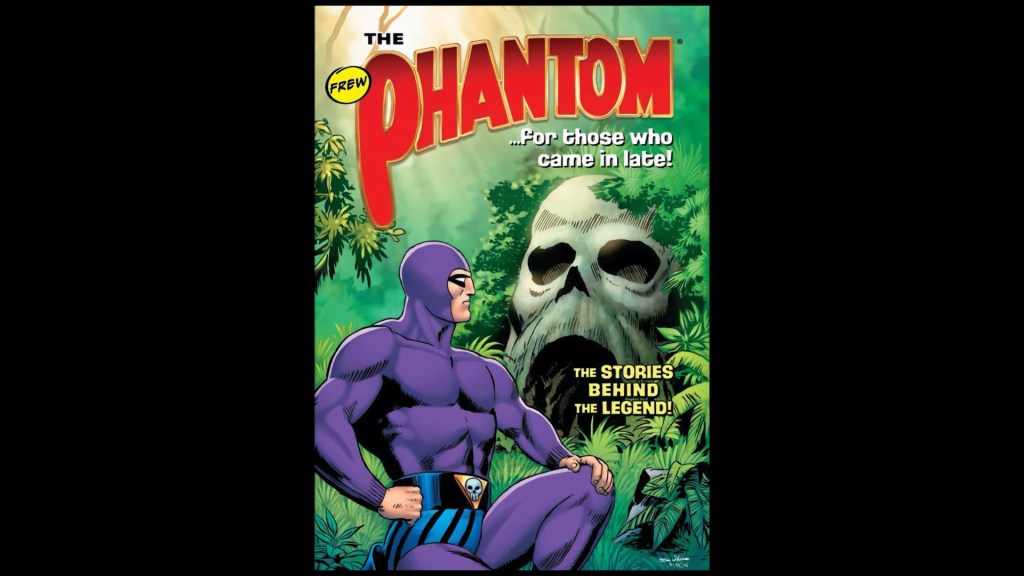
Lee Falk’s Phantom, the Ghost Who Walks, debuted in 1935. The Bandar jungle tribes believed him to be immortal. They were wrong, and they were right. He dies every generation. But the mask, the ring, and the oath pass to the son. And so the legend does not die. The individual is temporary. The function is eternal.
A surgeon, scrubbing in at 3 a.m., is doing something disturbingly similar.
They are both, fundamentally, “guardians who work in silence”.
And both belong to the same ancient tribe.
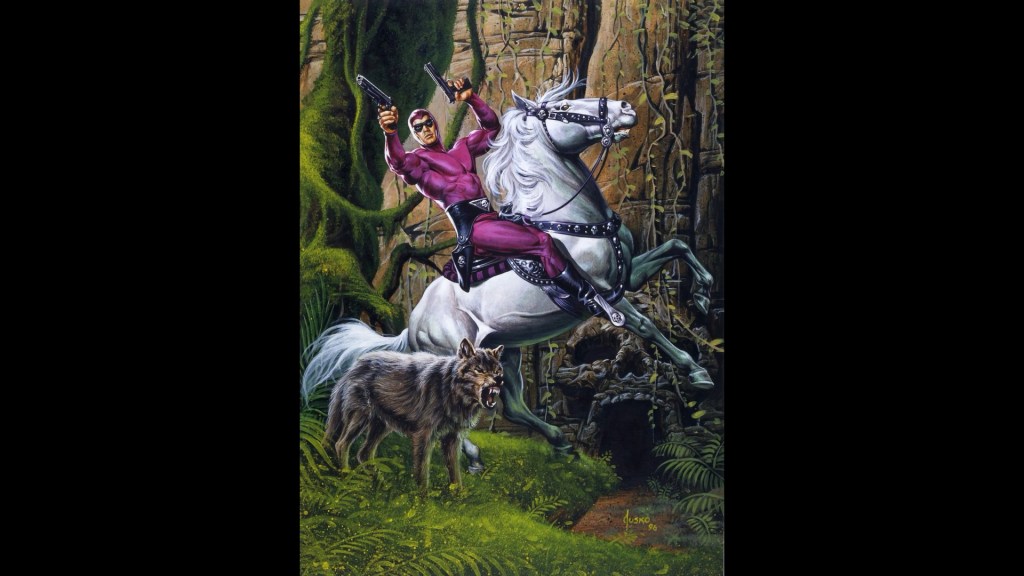
1535, Bengalla, The Oath of the Skull Cave
The man had no name yet. That would come later — whispered in a dozen tongues, carved into trees, feared on open water. For now he was only a survivor: barefoot, salt-burned, twenty years old, the sole living soul from the merchant vessel Donna Divina, which the Singh Brotherhood had taken apart plank by plank three days ago.
He had washed up on Bengalla’s coast with nothing but the ring he had torn from the finger of his father’s killer.
The cave was old before the century was. Skulls lined its shelves like books — not trophies, he somehow knew, but witnesses. The torch he’d found at the entrance sputtered in the still air. Somewhere, water dripped.
He knelt.
Not because he was weak. Because the weight of what he intended required the full length of his body pressed toward the earth.
The ring was heavy for its size. He turned it in his fingers — the death’s head leering up at him, patient, indifferent. He had seen men pray in his father’s memory. He had seen men weep. He had spent three days doing neither, only walking inland, pulled here by something he could not name and did not try to.
He pressed the ring onto his finger.
The cave held its breath.
“I swear to devote my life to the destruction of piracy, greed, cruelty, and injustice — in all their forms.”
No altar. No priest. No god volunteered a sign.
Only the skulls, watching from the dark.
Only the silence, pressing back.
He stayed on his knees a long time after, not in doubt, but because he understood — with a clarity that felt less like revelation than like cold water — that the man who stood up would not be the same man who had knelt. That man could be mourned. This one had work to do.
He stood.
The torch steadied.
He walked out into the Bengalla night — the first Ghost Who Walks, though he did not know it yet — and the cave behind him held the oath like a held breath, waiting for the next four hundred years to begin.
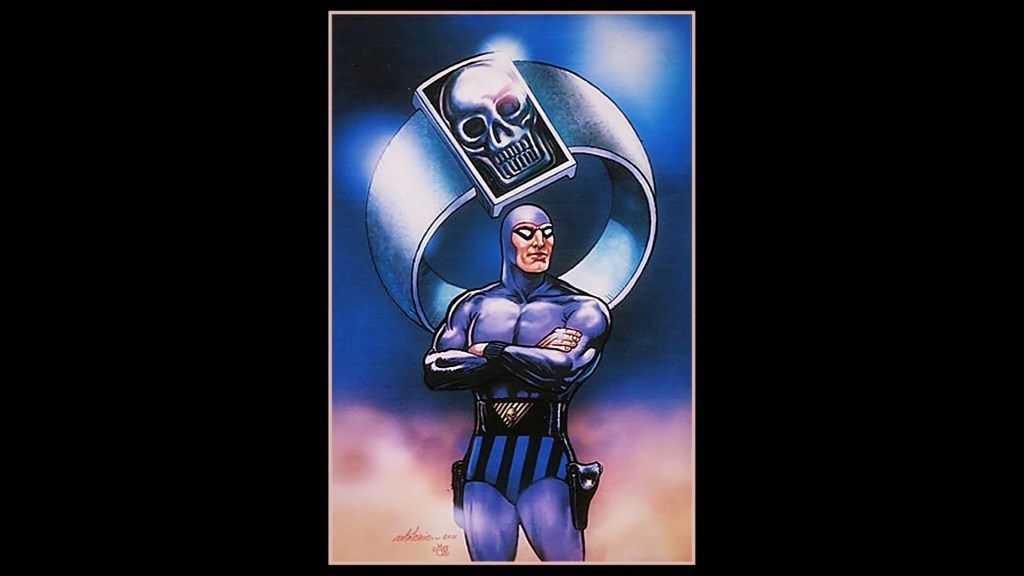
The Ghost Who Operates
I. The Scalpel is an Heirloom
No surgeon invented surgery. Every cut made today is a descendant of Vesalius’s dissections, Lister’s carbolic spray, Halsted’s obsessive knot-tying. The procedures bear their names like ancestral titles — the Whipple, the Billroth — and the surgeon who performs them is, for that hour, their living executor.
The Phantom calls this the Skull Oath. Medicine calls it tradition. Louis Lasagna’s 1964 rewrite—still recited in many medical schools. Both oaths are deontological thunderclaps: Duty first. Outcome second. They do not bargain with consequences. They demand the wearer become the role. The calling is eternal.
Philosophers call it trans-individualism — the idea that the office outlasts the officer. When a surgeon walks into the OR, he is not merely himself. He is the current vessel for five centuries of accumulated nerve. Of centuries of accumulated knowledge. “The individual dies. The role survives.” That is the Phantom’s deepest secret. It is also the quiet philosophy behind every surgical residency ever run.
Surgeons echo this. Carl Langenbuch’s 1882 cholecystectomy—the first gallbladder excision—lives in every laparoscopic port today. “The individual dies; the role survives,” as the document declares. The scalpel hands down anatomical wisdom, turning mortals into an undying craft. No ego, just continuity—Nietzsche’s eternal recurrence, bloodied and precise.
A surgeon is not a person. A surgeon is a continuity.
II. The Mask Is Not A Disguise. It Is Doctrine.
The Phantom’s mask isn’t a disguise; it’s dissolution. Behind purple fabric, Kit Walker vanishes. He becomes the archetype—justice incarnate. Surgeons do the same ritual every morning. The Phantom wears his mask so that ordinary people believe in a symbol rather than a frightened man. The surgeon wears hers so the patient believes in a calm, god-like figure rather than someone whose hands shook slightly at breakfast. The surgical mask is a “literal and symbolic” reminder that the OR is entirely about “the discipline of the craft”, not the ego.
Both masks are existential necessities. Sartre would call them bad faith if worn for cowardice. Worn for courage, they are something else entirely: the deliberate erasure of ego in service of function. Behind the fabric, both know the same terrifying truth — I am only a man. And both know the deeper truth — the role I play is larger than my fear.
This is Camus’s absurd hero made surgical: one who creates meaning in a universe that offers none, with a #15 blade and a sterile field.
III. The Skull Ring and the Surgical Scar
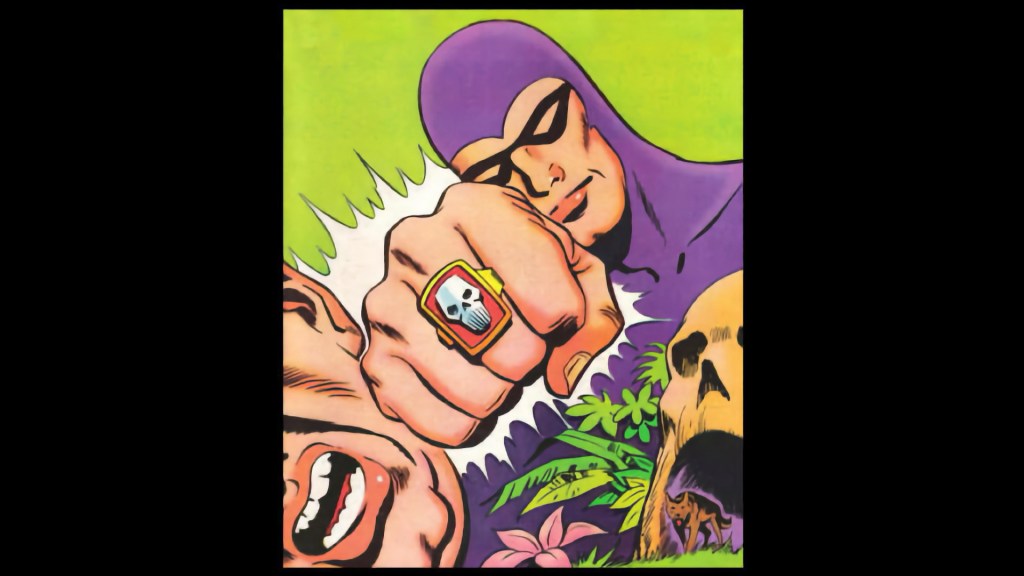
The Phantom’s right hand carries the Skull Ring. When he strikes a criminal, it leaves a permanent mark — small, indelible, unmistakable. Justice has been here.
The surgeon’s mark is gentler. The quiet line of a laparotomy. The small constellation of laparoscopic ports. The sternotomy’s white ridge. To the untrained eye, these are merely scars. To those who know, they are stories — the places where uncertainty was opened, where someone at a difficult hour entered the hidden landscape of the human body and tried to restore order. It proves that at a moment of terrifying uncertainty, someone stepped into the breach.
The Phantom marks wrongdoing. The surgeon marks the boundary between illness and survival. One mark warns the world. The other whispers that someone fought for life here.
IV. Beneficent Transgression
Here is the darkest parallel, and the most honest one.
The Phantom violates sovereignty. He crosses borders without jurisdiction, uses force without legal authority, and is feared for it. In any normal context, what he does is a crime.
The surgeon cuts living flesh. He enters the body’s interior, handles organs with his bare hands, and deliberately causes injury in the hope of healing. In any other context, this too is a crime.
The Phantom is feared because he cannot die.
The surgeon is trusted because he seems to defy death.
But both know the truth: Death is never defeated. Only delayed.
And yet, both step forward anyway.
Not because they will always succeed—
but because: the attempt itself is the duty.
The costume and the gown are society’s permits — the social agreements that transform transgression into duty. Both figures are licensed to do what is ordinarily forbidden. And both carry this license as a weight, not a privilege.
V. The Loneliness of the Guardian
The Phantom lives in Skull Cave, hidden even from the woman he loves. He has seen what lies beneath the surface of the world — the rot, the cruelty, the arranged injustice — and he cannot unsee it.
The surgeon lives in the strange loneliness of the on-call room. The 3 a.m. decision that no one else can share. When it comes down to “The critical decision” and “The irreversible cut”, the surgeon stands entirely alone with the burden of responsibility. The knowledge of what lies beneath the skin — literal and metabolic — and the particular silence of carrying that knowledge home.
Neither quits. This is the final philosophical parallel: chosen solitude in service of others. They have accepted the ancient trade-off — you may have peace, or you may have purpose. They chose purpose. Every time.
The code becomes your shadow.
In the end, both the Phantom and the surgeon are performing the same sacred, ridiculous, heroic act. They have looked at a world full of suffering and said: Not on my watch.
One does it with a mask and a .45. The other does it with a mask and a scalpel.
Different costumes. Identical philosophy.
Also, the Phantom stalks unseen. Most of the jungle never glimpses him clearly. His greatest acts unfold in darkness. Surgeons operate in a similar, strange obscurity. Patients remember the countdown before anaesthesia and the groggy awakening. The greatest battles for your life are fought while you’re taking a nap.
And when the operation ends, the mask comes off. The legend dissolves. The surgeon returns to being human again. But somewhere, deep within the profession, the role remains — waiting for the next time the mask is worn, the next pair of hands that will carry it forward.
Technology evolves.
Instruments sharpen.
But the essential figure never changes: a masked guardian standing over a vulnerable body, holding the fragile line between life and death. Aristotle’s aretē—excellence—raised to sacrament. Both reduce chaos to one decisive action. A millimetre off and the story ends badly. Both have signed the same terrifying contract: “My precision is the thin line between order and horror.”
And in that moment, every surgeon who enters an operating theatre becomes — for a brief, vertiginous, mortal moment — “A Ghost Who Walks“. “Man Who Cannot Die”- old jungle saying!
 Siddhartha Phukan – My Surgical World
Leave a comment